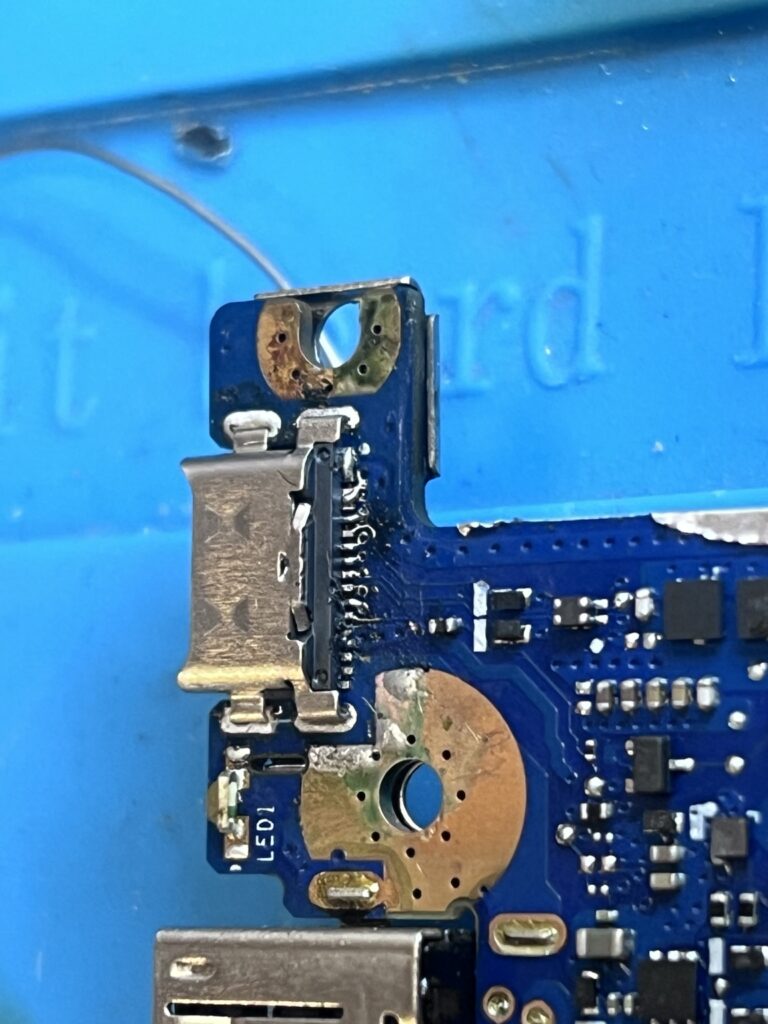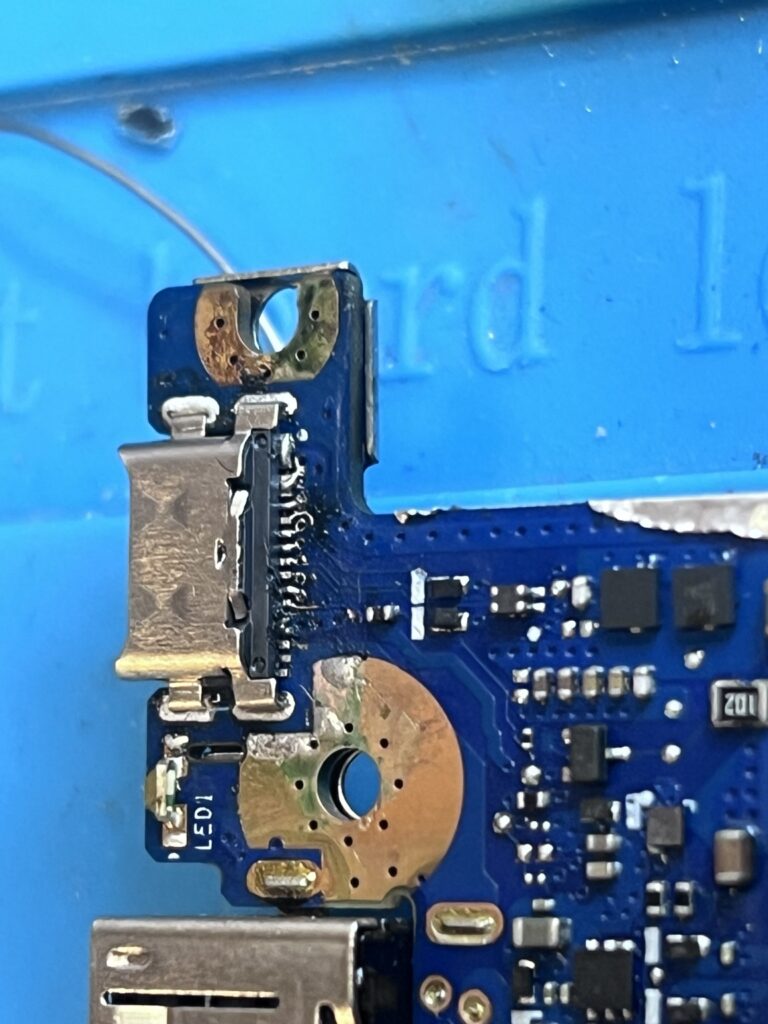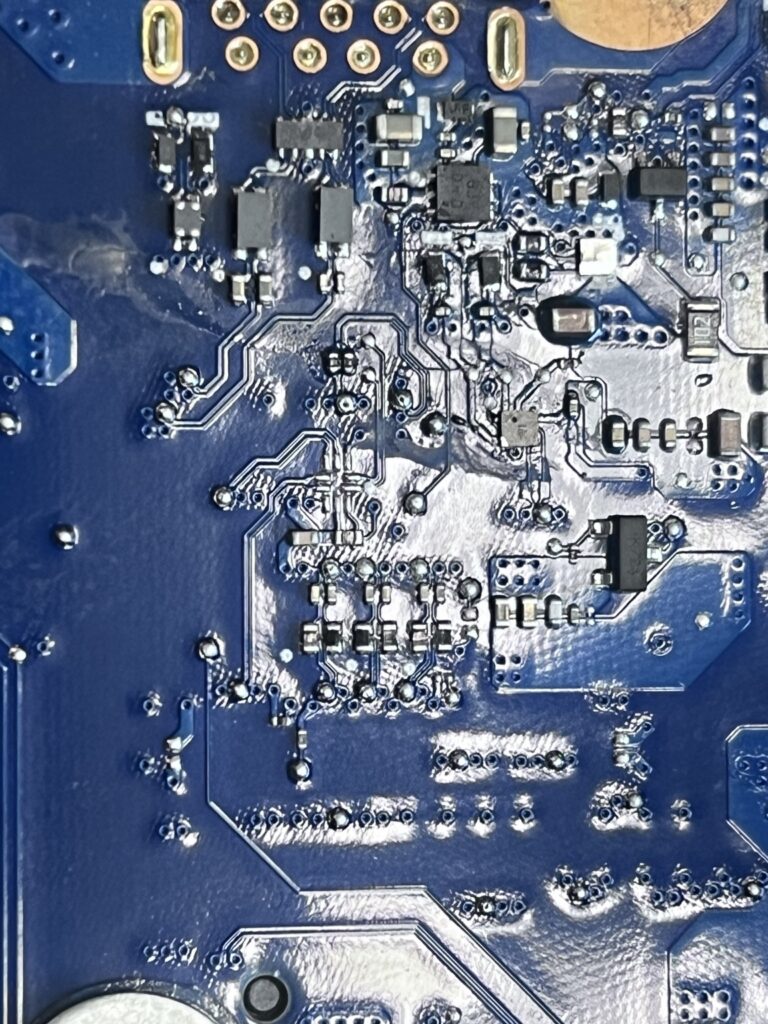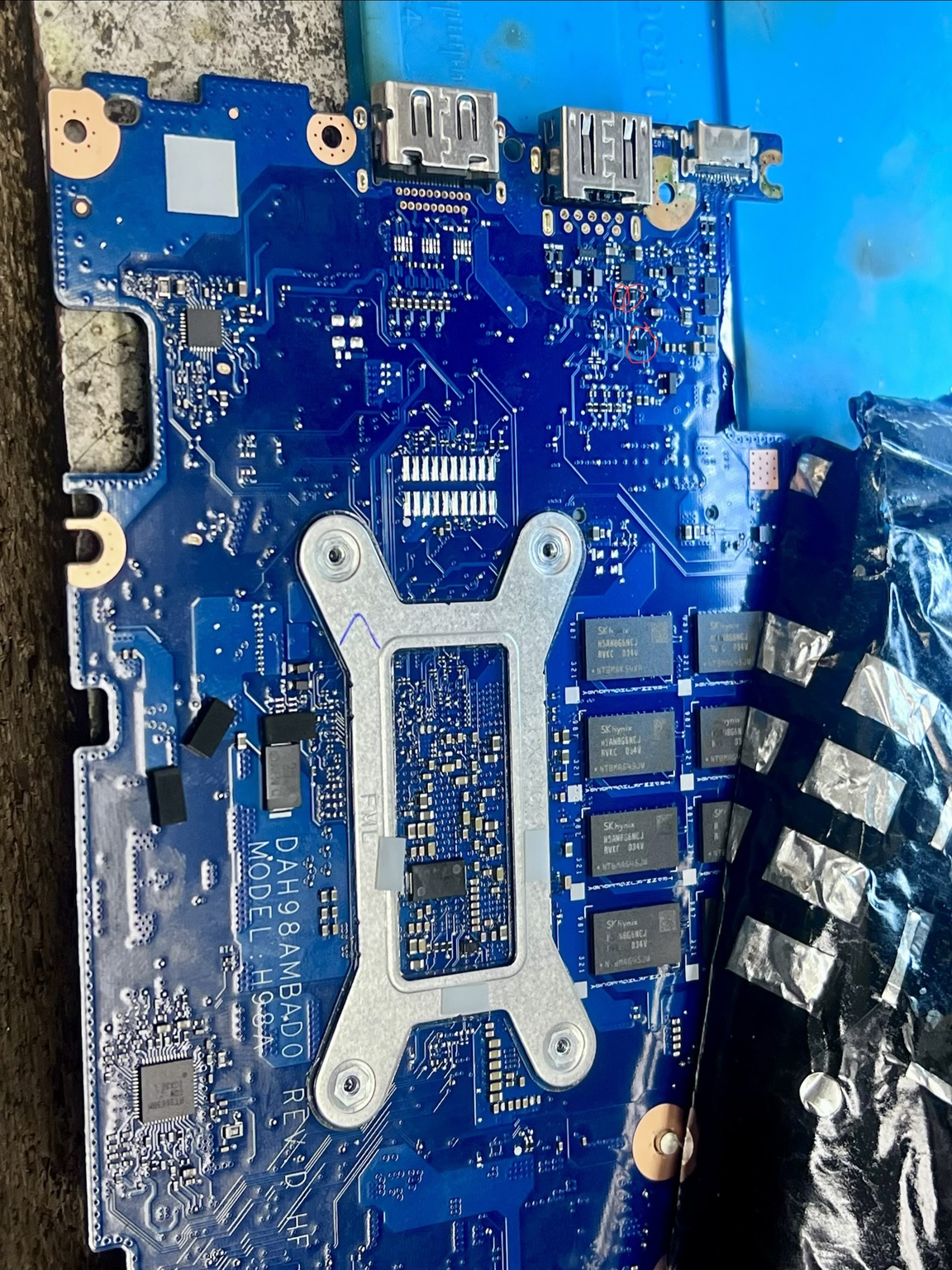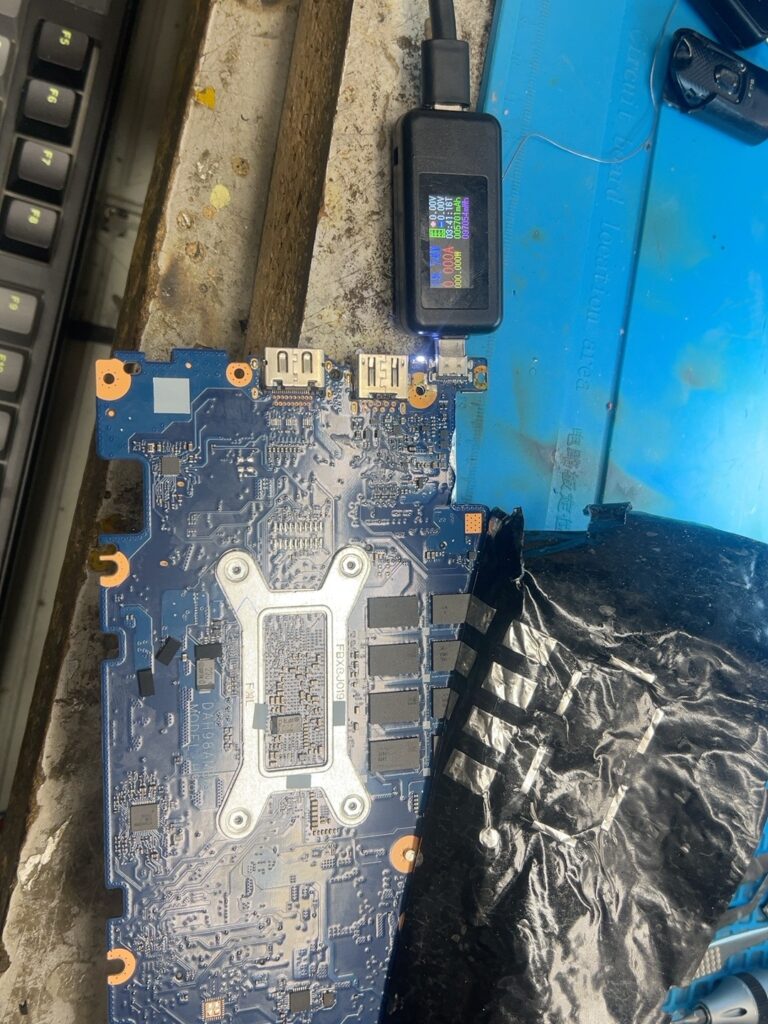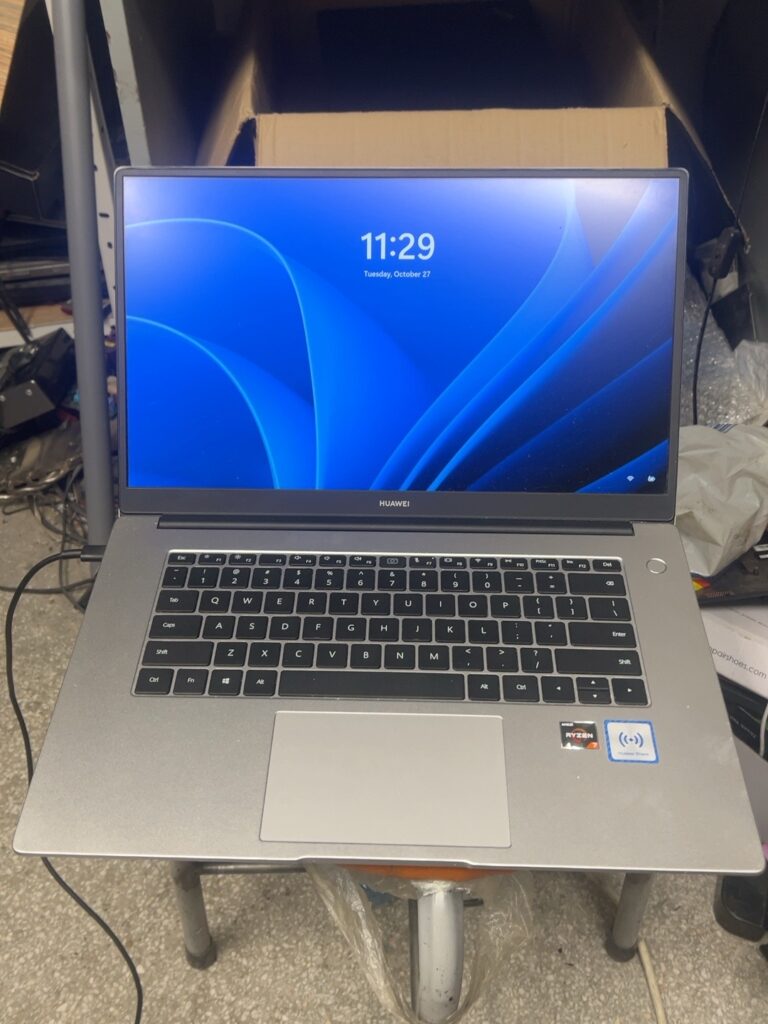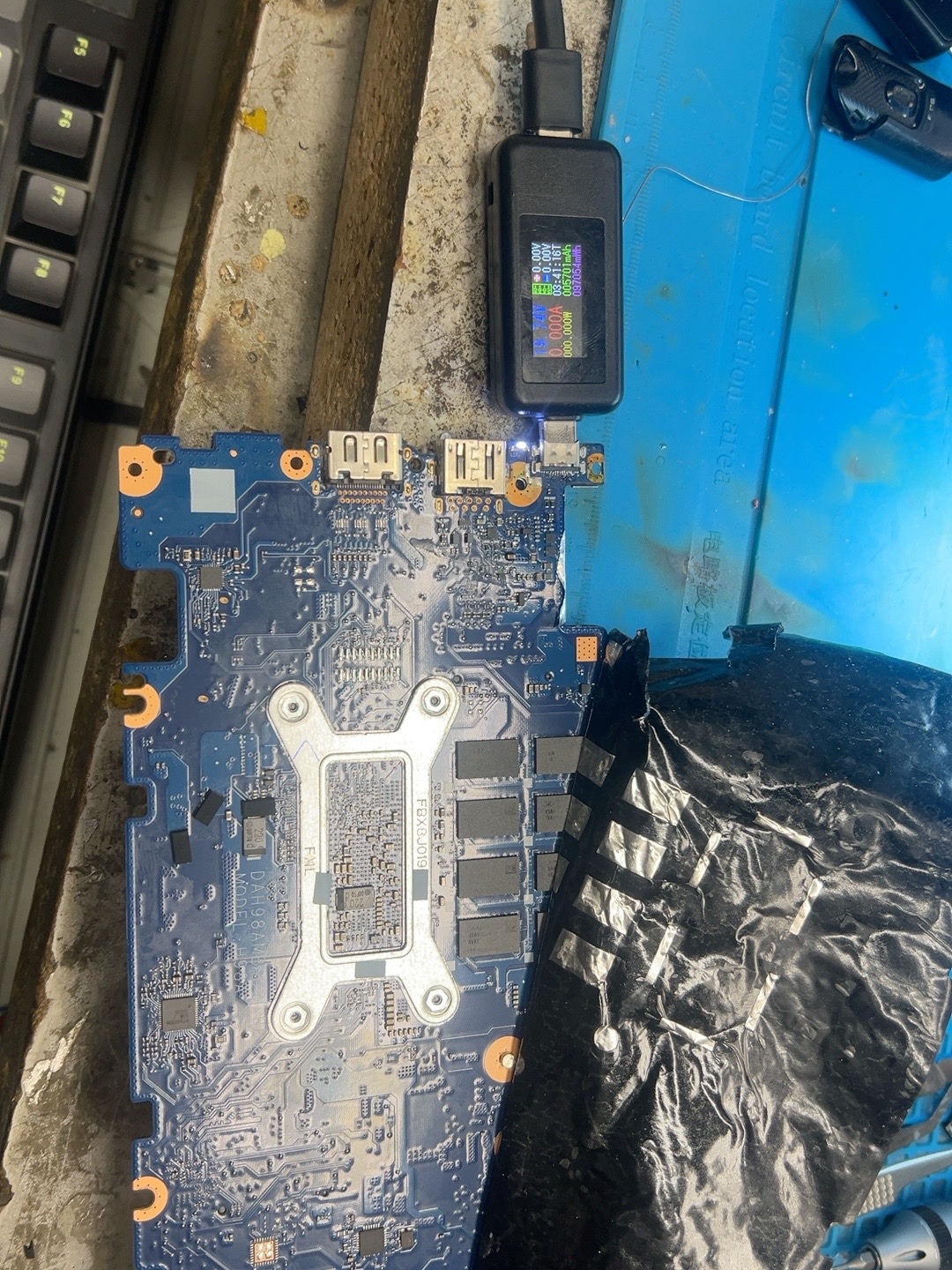
A Huawei MateBook D with DAH98AMBAD0 Rev:D motherboard arrived with a very specific USB-C charging fault: the charger was detected only when the Type-C plug was inserted in one orientation. Turning the plug 180 degrees resulted in no charging negotiation at all.
Initial repair
The USB-C receptacle had already been replaced and the damaged tracks around it were reconstructed. The connector was mechanically sound and continuity was restored, but the one-orientation charging fault remained.
Fault isolation
USB-C uses CC1 and CC2 as separate configuration-channel paths. Only one is active for a given plug orientation. A fault that appears only after reversing the cable therefore points directly to one CC path: the receptacle pin, a repaired trace, its TVS protection device, a series component, or the PD-controller input.
The failed component
The cause was a TVS protection diode on one CC line. It looked normal and did not present as an obvious dead short during a static measurement. Under live USB Power Delivery negotiation, however, it loaded the CC signal enough to prevent the charger and laptop from detecting each other in that orientation.
Important diagnostic rule
CC1 and CC2 must not be shorted together as a workaround. They are independent orientation-detection lines. Bridging them can mask the symptom while creating an unreliable or unsafe USB-C PD connection.
Verification after repair
After replacing the faulty TVS device, the laptop negotiated 20 V with a USB-C PD tester in both plug orientations. The MateBook D was reassembled, booted normally and charged correctly from either side of the Type-C cable. This case is a good reminder to check the CC protection network before replacing a PD controller blindly.